Melinda Gill Black sent us this pic of a wicked Cholla cactus with a delicate bird's nest tucked inside at Big Bend Ranch State Park. My guess is a Cactus Wren. Your guess?
Your daily photo of gorgeous Far West Texas featuring Big Bend National Park, the Davis Mountains, Guadalupe Mountains National Park, El Paso and all points in between!
Showing posts with label birding. Show all posts
Friday, November 21, 2014
Home Sticky Home
Thursday, September 25, 2014
Whoooo's there?
Texas Parks and Wildlife Urban Wildlife- El Paso took these photos of a natural burrow of owls just outside the city. Watch the Burrowing Owls grow as they post photos to their Facebook page (linked above).
Monday, September 15, 2014
Hummingbird Happiness at CDRI
Master Naturalist Jack Dunaway in Waxahachie snapped this pic of hummingbirds at CDRI and had this to say:
"Let me tell you what a great time I had visiting CDRI last week. I had not been to the Davis Mountains for over 40 years, but will not let that happen again! I did not remember how intriguing the Trans Pecos is. I will be back to explore some more."
So glad you feel this way, Jack! Great pics!
Wednesday, August 13, 2014
Great Horned Owl
From our friends at the Chihuahuan Desert Nature Center in Fort Davis:
Normally expected to be active at night, this great horned owl (Bubo virginianus) was out during daylight hours hiding in plain sight. One of CDRI’s wildlife cameras—provided by a grant from the El Paso Zoo—caught the bird foraging in the camouflaging leaf litter. Its mottled plumage allows this species to blend into a wide variety of habitat types.
It is the most common and widely dispersed owl in North America, as well as one of the largest. CDRI has a resident pair nesting in the cliffs bordering our rhyolite quarry. The great horned owl is one of a multitude of species that can be observed at the nature center.
Normally expected to be active at night, this great horned owl (Bubo virginianus) was out during daylight hours hiding in plain sight. One of CDRI’s wildlife cameras—provided by a grant from the El Paso Zoo—caught the bird foraging in the camouflaging leaf litter. Its mottled plumage allows this species to blend into a wide variety of habitat types.
It is the most common and widely dispersed owl in North America, as well as one of the largest. CDRI has a resident pair nesting in the cliffs bordering our rhyolite quarry. The great horned owl is one of a multitude of species that can be observed at the nature center.
Tuesday, August 12, 2014
Fort Davis Hummingbird Festival...registration closes August 15!
| Photos from banding demonstrations by Kelly Bryan |
Thursday, August 21st:
1:00pm - 6:00pm Registration: Fort Davis Chamber of Commerce
3:00pm - 5:00pm Banding Demonstration w/Kelly Bryan - CDRI
6:00pm - 8:00pm Opening Reception: Hotel Limpia Ballroom
Meet and Greet with the speakers
Friday, August 22nd:
6:00am Mountain Trails Lodge Field Trip - Christmas Mountains Oasis
8:00am-9:00am Late Registration: Fort Davis Chamber of Commerce
8:00am-11:00am Banding Demonstration w/Kelly Bryan - Nature Conservancy
8:00am-12:00noon Local viewing locations open
3:00pm-5:00pm Banding Demonstration w/Kelly Bryan - Mountain Trails Lodge
3:00pm Lecture - TBA
4:00pm Lecture - Chris Pipes "Sky Island Ecology in the Trans-Pecos of
Texas"
6:30pm Lecture - Mark Lockwood "Amazing Tropical Hummingbirds"
4:00pm - 8:00pm Local viewing locations open
Saturday, August 23rd:
8:00am-11:00am Banding Demonstration w/Kelly Bryan - Nature Conservancy
8:00am-12:00noon Local viewing locations open
3:00pm Hummingbird Feeder Workshop
4:00pm Lecture - Kelly Bryan "Lucifer Hummingbirds"
6:00pm Festival Dinner with Keynote speaker Fred Bassett
(additional fee applies for the dinner)
REGISTRATION
Registration Cost: $75.00 per person
Includes: Ticket to Opening Reception
Booklet "Hummingbirds of West Texas" by Kelly Bryan
Map of local viewing areas
Hummingbird "Goodie Bag"
Admission to :
CDRI Botanical Gardens
Davis Mountains State Park
Festival Dinner with Keynote Speaker: $35.00 per person
Includes: Downhome Texas Pit BBQ Dinner with all the trimmings
Fill out and mail your registration form today!
Early Registration ends August 15th.
REGISTRATION FORM
FESTIVAL SCHEDULE
Registration Cost: $75.00 per person
Includes: Ticket to Opening Reception
Booklet "Hummingbirds of West Texas" by Kelly Bryan
Map of local viewing areas
Hummingbird "Goodie Bag"
Admission to :
CDRI Botanical Gardens
Davis Mountains State Park
Festival Dinner with Keynote Speaker: $35.00 per person
Includes: Downhome Texas Pit BBQ Dinner with all the trimmings
Fill out and mail your registration form today!
Early Registration ends August 15th.
REGISTRATION FORM

FESTIVAL SCHEDULE
Thursday, August 07, 2014
Hummers!
![]() |
| Click on the images to get a closer view! |
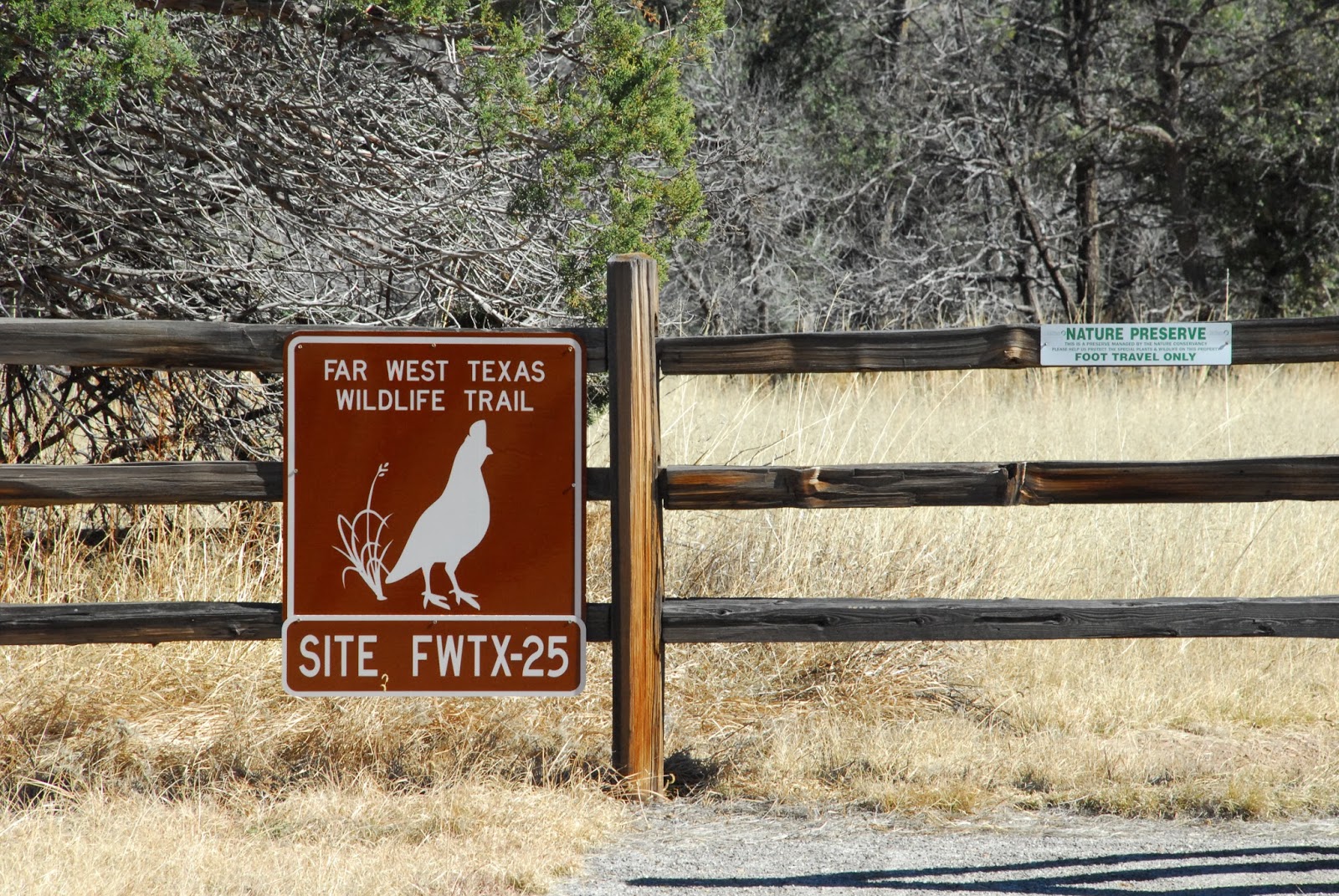
Now's a GREAT time to watch hummingbirds who vie for space at feeders...where are some good places to view them? Try Chihuahuan Desert Nature Center, and Mountain Trails Lodge in Fort Davis, Dog Canyon Visitor Center in Guadalupe Mountains National Park. All are sites on the Far West Texas Wildlife Trail, a project of Texas Mountain Trail, TPWD, and Texas Pecos Trail!
Thursday, July 10, 2014
Black Hawk
For all you birders, from our friends at the Chihuahuan Desert Nature Center:
"One of our remote wildlife cameras caught what appears to be an adult common black hawk (Buteogallus anthracinus) drinking or fishing in the perennial Modesta Spring. It is a stocky black bird of prey with very broad wings and a broad white tail band. The bare skin of the legs and cere (the featherless part of the face at the base of the bill) is yellow. Black hawks inhabit wooded canyons and riverside habitats throughout the southwest and migrate south of the U.S. border during the winter. They feed mainly on aquatic creatures such as frogs, small fish, crabs, and crayfish, thus the importance of the spring in attracting this individual. Although active nests are known in the Fort Davis area, this individual might represent a previously unknown nesting pair. The species is vulnerable to disturbance near its nesting sites and seems to be declining in the United States."
Wednesday, May 21, 2014
Bird Blinds at Davis Mountains State Park
Davis Mountains State Park rangers and staff members, along with Texas Master Naturalists, recently completed this lovely bird blind structure on the main park road. Stop by in the morning and the evening to see an impressive array of birds! The new center has a water feature and several styles of bird feeders.
There are open air windows and glassed in windows to allow you to view the birds. Another alternative is the bird blind by the park's Interpretive Center, see below.
View from inside the Interpretive Center, where birds gather at a variety of feeders.
There are open air windows and glassed in windows to allow you to view the birds. Another alternative is the bird blind by the park's Interpretive Center, see below.
View from inside the Interpretive Center, where birds gather at a variety of feeders.
Monday, April 21, 2014
Tumbleweeds, bird songs, and biking to the farmstand!
The spring winds help tumbleweeds (Russian Thistle) gather at the fence line. From a ranch north of Marfa, we heard birds....
To continue our series of cycling in the Texas Mountain Trail region, during this challenge month of #30DaysofBiking, our Executive Director rode her bike to the Saturday morning, Marfa Farmstand for some spinach! Marfa, like many of our communities, have low vehicular traffic and increasingly more cyclists--both locals on bikes and visitors! Bikes are fun, and they're transportation!
the video is a bit shaky, but we're sharing this because we wanted you to hear the birds sing!
#30DaysofBikingTo continue our series of cycling in the Texas Mountain Trail region, during this challenge month of #30DaysofBiking, our Executive Director rode her bike to the Saturday morning, Marfa Farmstand for some spinach! Marfa, like many of our communities, have low vehicular traffic and increasingly more cyclists--both locals on bikes and visitors! Bikes are fun, and they're transportation!
Thursday, April 03, 2014
Do you have birding photos of Guadalupe Mountains National Park?
Our friends at Guadalupe Mountains National Park contacted us this week for help from our photographer friends!
"Guadalupe Mountains National Park is nearing completion of a new bird checklist. This new checklist will be very attractive, and will feature full color photos.
Please contact me if you have any questions, or have any photos we can use.
Thank you, in advance, for your assistance!
Karl
Karl M. Pierce
Chief of Interpretation, Education and Visitor Services
Guadalupe Mountains National Park
400 Pine Canyon Drive
Salt Flat, TX 79847
Tel. (915) 828-3251 x2300
Email: Karl_Pierce@nps.gov
Internet: www.nps.gov/GUMO/
Facebook: www.facebook.com/Guadalupe. Mountains/ "
#30DaysofBiking
Our Executive Director continues her #30DaysofBiking Challenge around the region. Yesterday, it was a ride to IronHeart Gym in Marfa, across the street from the historic Hotel Paisano. Many travelers missing their regular gym workout use IronHeart when they're in Marfa.
Chief of Interpretation, Education and Visitor Services
Guadalupe Mountains National Park
400 Pine Canyon Drive
Salt Flat, TX 79847
Tel. (915) 828-3251 x2300
Email: Karl_Pierce@nps.gov
Internet: www.nps.gov/GUMO/
Facebook: www.facebook.com/Guadalupe.
#30DaysofBiking
Our Executive Director continues her #30DaysofBiking Challenge around the region. Yesterday, it was a ride to IronHeart Gym in Marfa, across the street from the historic Hotel Paisano. Many travelers missing their regular gym workout use IronHeart when they're in Marfa.
Saturday, March 01, 2014
Spring is here: 36 species of blooming cacti, 5 species of butterflies spotted.....
Spring is creeping up on us at Fort Davis' Chihuahuan Desert Nature Center. Staffers tell us that yesterday, there were 36 species of cactus blooming in the Cactus Greenhouse! This week, the verbena was blooming out in the garden, and five species of butterflies were spotted.
A couple of weeks ago, participants in the Backyard Bird Count at CDRI saw 15 species, including a cedar waxwing, which is fairly unusual for the area. This week five species of butterflies were spotted: Painted Lady, Sleepy Orange, Checkered White, Pipevine and the Two-tailed Swallowtail. The resident fox and rabbits are busy in the garden, too.
Come on out and see spring arrive at the Chihuahuan Desert Nature Center, just four miles outside Fort Davis!
![]() |
| Mammilloydia candida |
![]() |
| Echinocereus vividiflorus v. canus |
![]() |
| Mammillaria gigantea |
Come on out and see spring arrive at the Chihuahuan Desert Nature Center, just four miles outside Fort Davis!
Wednesday, February 12, 2014
More Birding Fun-Great Backyard Bird Count at CRDI on February 15
Chihuahuan Desert Nature Center is hosting The Great Backyard Bird Count on February 15. This annual four day event engages bird watchers of all ages in counting birds to create a real-time snapshot of where the birds are.
Everyone is welcome, from beginning bird watchers to experts. It's free, fun, and easy--and it helps the birds. Join the fun at the Nature Center (4 miles south of Fort Davis on Hwy 118) at 8:30 am to participate in the bird count!
The full event listing on our Texas Mountain Trail regional event calendar, HERE.
CDRI is on the Far West Texas Wildlife Trail map, a project of our Texas Mountain Trail non-profit and TPWD. Below is the entry for CDRI on the map:
"The center sits on 507 acres in the foothills of the Davis Mountains. The botanical gardens, a protected canyon with perennial springs, grasslands with mixed desert scrub, and seasonal tanks provide several habitat zones for birds and bird watching. Hummingbird feeders are maintained around the center and primarily attract Black-chinned, but Rufous, Broad-tailed and maybe the occasional Calliope can be seen in the fall. The center offers many nature programs to the public and maintains hiking trails on the center’s property."
Read more about the other sites on the Davis Mountains Loop of the Far West Texas Wildlife Trail, HERE. Would you like to purchase a map? Click here for purchase information.
Everyone is welcome, from beginning bird watchers to experts. It's free, fun, and easy--and it helps the birds. Join the fun at the Nature Center (4 miles south of Fort Davis on Hwy 118) at 8:30 am to participate in the bird count!
The full event listing on our Texas Mountain Trail regional event calendar, HERE.
CDRI is on the Far West Texas Wildlife Trail map, a project of our Texas Mountain Trail non-profit and TPWD. Below is the entry for CDRI on the map:
"The center sits on 507 acres in the foothills of the Davis Mountains. The botanical gardens, a protected canyon with perennial springs, grasslands with mixed desert scrub, and seasonal tanks provide several habitat zones for birds and bird watching. Hummingbird feeders are maintained around the center and primarily attract Black-chinned, but Rufous, Broad-tailed and maybe the occasional Calliope can be seen in the fall. The center offers many nature programs to the public and maintains hiking trails on the center’s property."
Read more about the other sites on the Davis Mountains Loop of the Far West Texas Wildlife Trail, HERE. Would you like to purchase a map? Click here for purchase information.
Tuesday, February 11, 2014
Birding in Big Bend's Rio Grande Village
At the southeastern edge of Big Bend National Park, the Rio Grande Village is a birding bonanza.It is a site on our Far West Texas Wildlife Trail map, a partnership of our Texas Mountain Trail organization and Texas Parks and Wildlife Department. Information on purchasing a map is HERE. The entire Big Bend Loop on the map is viewable HERE.
"The campground nature trail has a boardwalk over a spring-fed lagoon. The location is small but the tall trees and water found are irresistible to birds. Look for grebes, herons, egrets, bitterns, night-herons, rails, swallows, Marsh Wren, Common Yellowthroat, and Swamp Sparrow and kingfishers. Carolina Wrens, an eastern species, have taken up residence. Vermilion Flycatchers are easy to observe at the lagoon and in the campground. Several rare to accidental birds have been observed at this location including Ruddy Ground-Dove, Tufted Flycatcher, Piratic Flycatcher, Thick-billed Kingbird, Rufous-backed Robin, Tropical Parula and Black-vented Oriole. In years past, Gray Hawk and Common Black-Hawk have nested along the main road. First to appear in the evening are abundant Lesser Nighthawks, then Common Poor-wills followed by Western Screech-Owl and Elf Owl."
Visit Big Bend's birding page is HERE.
Tuesday, February 04, 2014
Big Bend Heritage Hike: Sam Nail Ranch
There's a great little hike in Big Bend National Park that's loaded with things to see, Sam Nail Ranch off Ross Maxwell Scenic Drive. Here's what the park's website says about the hike:
Sam Nail Ranch
Difficulty: Easy; Distance: 0.5 mile loop
Begin at Mile 3, Ross Maxwell Scenic Drive
An easy, well-maintained trail leads through the old homestead of Jim and Sam Nail and Sam's wife, Nena. There are interesting historic remnants here, including part of the adobe walls of the house and two windmills, one which is still in operation. This is a beautiful desert oasis and a great spot for birding and wildlife viewing.
"Sam R. Nail and his brother, Jim, moved to the area just east of Burro Mesa, in 1916. The two borthers (sic), with little outside assistance, constructed a one-story adobe house following the building techniques of the native Mexican-Americans along the river. The house had a concrete floor, a vega-and-cane ceiling, and a corrugated metal roof. In addition, they dug a well, put in a garden, and constructed a small holding pen for a milk cow, chickens and to hold horses.
The two brothers lived there along for two years, or until June of 1918 when Sam married Miss Nena Burnam. They drove from the Burnam place to Government Spring to the Nail Ranch home near Burro Mesa in a surrey with fringe around the top. The surrey was pulled by two young mules.
Here the Nails lived, reared a family, and ranched seventeen sections which the owned, plus about an equal number of leased or otherwise used sections which were within their fence. The Nails, like most other ranch people of the area, produced much of their living on the ranch. They kept milk cows, had chickens and hogs for additional food supply, and developed a garden, in which they produced many types of vegetables, melons and fruits.
Although life on the ranch was difficult at times, on the whole they loved the place, and while they were in sympathy with the movement for the establishment of the park, they gave up their ranch with considerable amount of regret. --from an interview with Mrs. Sam R. Nail, April 13, 1967. (Soldiers, Ranchers, and Miners in the Big Bend, by Clifford R. Casey, 1967.)
Today, the short hike (on easy terrain, with a few steps and suitable for just about anyone) takes you through the homestead. The growth of pecan, walnut and willow trees and grasses provide great habitat for birdwatching. There are also benches to rest and perhaps enjoy a sack lunch and listen to the birds.
Our Far West Texas Wildlife Trail provides this guidance for birders:
"Sam Nail Ranch contains a working windmill and remnant woodland that is a hot spot for birds especially during migration. It is also just a short walk from the parking area along the highway. This is a good place to go during the hotter times of the day, as bird activity can be quite intense during non-rainy periods. A majority of the species will be vireos, wrens, thrushes, thrashers, warblers, tanagers, towhees, sparrows, grosbeaks, buntings and orioles."
Sam Nail Ranch
Difficulty: Easy; Distance: 0.5 mile loop
Begin at Mile 3, Ross Maxwell Scenic Drive
An easy, well-maintained trail leads through the old homestead of Jim and Sam Nail and Sam's wife, Nena. There are interesting historic remnants here, including part of the adobe walls of the house and two windmills, one which is still in operation. This is a beautiful desert oasis and a great spot for birding and wildlife viewing.
![]() |
| Trailhead just off Ross Maxwell Scenic Drive |
![]() |
| Looking back at the Chisos Mountains from the trailhead |
The two brothers lived there along for two years, or until June of 1918 when Sam married Miss Nena Burnam. They drove from the Burnam place to Government Spring to the Nail Ranch home near Burro Mesa in a surrey with fringe around the top. The surrey was pulled by two young mules.
Here the Nails lived, reared a family, and ranched seventeen sections which the owned, plus about an equal number of leased or otherwise used sections which were within their fence. The Nails, like most other ranch people of the area, produced much of their living on the ranch. They kept milk cows, had chickens and hogs for additional food supply, and developed a garden, in which they produced many types of vegetables, melons and fruits.
Although life on the ranch was difficult at times, on the whole they loved the place, and while they were in sympathy with the movement for the establishment of the park, they gave up their ranch with considerable amount of regret. --from an interview with Mrs. Sam R. Nail, April 13, 1967. (Soldiers, Ranchers, and Miners in the Big Bend, by Clifford R. Casey, 1967.)
Today, the short hike (on easy terrain, with a few steps and suitable for just about anyone) takes you through the homestead. The growth of pecan, walnut and willow trees and grasses provide great habitat for birdwatching. There are also benches to rest and perhaps enjoy a sack lunch and listen to the birds.
Our Far West Texas Wildlife Trail provides this guidance for birders:
"Sam Nail Ranch contains a working windmill and remnant woodland that is a hot spot for birds especially during migration. It is also just a short walk from the parking area along the highway. This is a good place to go during the hotter times of the day, as bird activity can be quite intense during non-rainy periods. A majority of the species will be vireos, wrens, thrushes, thrashers, warblers, tanagers, towhees, sparrows, grosbeaks, buntings and orioles."
Monday, December 16, 2013
Montezuma Quail
The Madera Canyon Trail is 2.4 miles (rated moderate) and is a site on the Far West Texas Wildlife Trail, a collaborative project between our own Texas Mountain Trail and Texas Parks and Wildlife. Would you like your own map? Click here for purchase information.
Owned and maintained by the Nature Conservancy's Davis Mountains Preserve, it is open to foot traffic 365 days a week. (To protect the sensitive landscape, pets are not allowed on the trail.)
The Nature Conservancy offers this description of the trail:
"A moderately difficult hike, the trail offers views of Madera Canyon, Pine Peak, Mount Livermore (the highest peak in the Davis Mountains), Sawtooth Mountain and the whole of the upper watershed for Madera Creek. At one point, the trail drops down into Chico Canyon, where it follows the creek and takes hikers past a historic stock tank.
Hikers traverse stands of stately
ponderosa pines, pinion-juniper woodlands and grassy meadows. Wildlife that may be present, particularly at
dawn or dusk, includes gray foxes, ringtails, western scrub jays,
acorn woodpeckers, Montezuma quail, golden eagles, Davis Mountains cottontails,
javelina, white-tail and mule deer, mountain short-horned lizards and, rarely, mountain
lions. At dawn, visitors may listen for
the bugling of elk in the fall or the chorus of coyotes any time of year.
We were lucky enough to see Montezuma Quail...first one, then two, then several right at the trailhead, and later in the hike at elevation, we saw many more. The wonderful birding website from the Cornell Lab of Ornithology says this about the Montezuma Quail:
"The Montezuma Quail usually crouches and stays still when danger threatens, and then explodes into flight from a leaping start if the danger comes too close."
That's EXACTLY what happened to us...as we hiked along we never saw them in the grass, then as we approached....all of a sudden, there was an "explosion" of birds taking to flight. What fun!
More views of the trail:
Tuesday, December 03, 2013
Participate in the Christmas Bird Count!
Be a part of the National Audubon Society’s Christmas Bird Count! Each year, volunteers collect data in the Davis Mountains (December 14) and in Balmorhea (December 15) during this international birding event designed to monitor the status of resident and migratory birds in the Western Hemisphere.
Everyone is invited, and birders of all skill levels are encouraged to participate. See more at our calendar listing, HERE, including contact information for more information and to sign up!

The count will take place in Fort Davis on December 14, and Balmorhea on December 15!
One place to get more information on the Christmas Bird Count is Fort Davis' Chihuahuan Desert Nature Center.
One updated resource for birders and wildlife watchers is just now available...the Far West Texas Wildlife Trail map is now in its second printing, with new sites and updates! Click here for purchase information!
Everyone is invited, and birders of all skill levels are encouraged to participate. See more at our calendar listing, HERE, including contact information for more information and to sign up!
The count will take place in Fort Davis on December 14, and Balmorhea on December 15!
One place to get more information on the Christmas Bird Count is Fort Davis' Chihuahuan Desert Nature Center.
One updated resource for birders and wildlife watchers is just now available...the Far West Texas Wildlife Trail map is now in its second printing, with new sites and updates! Click here for purchase information!
Be
a part of the National Audubon Society’s Christmas Bird Count. Each
year, volunteers collect data in the Davis Mountains (December 14) and
in Balmorhea (December 15) during this international birding event
designed to monitor the status of resident and migratory birds in the
Western Hemisphere. Everyone is invited, and birders of all skill
levels are encouraged to participate. - See more at:
http://texasmountaintrail.com/events/christmas-bird-counts#sthash.M2fj03Sb.dpuf
Friday, October 25, 2013
Big Bend is Back in Business!
| Road into the Chisos Mountains of Big Bend National Park |
![]() |
| The Window and the wonderful Chisos Mountain Lodge |
The Chisos Mountain Lodge is open, the campgrounds are open (links: http://visitbigbend.com/lodging/lodging-type/camping and http://www.nps.gov/bibe/planyourvisit/campgrounds.htm), the trails are open, the outfitters are ready for you, and even the Boquillas Crossing to Mexico is open!
![]() |
| Birding platform by Rio Grande Village |
Travel Spotlight -the Rocking Chairs of the Hotel Limpia
| Many of our travelers visit Big Bend and then head up to the Davis Mountains on the same trip. If you do, one of the best places to relax in Fort Davis is the historic HotelLimpia...on one of their many rocking chairs! |
Wednesday, October 23, 2013
Ojito Adentro Trail in Big Bend Ranch State Park
![]() |
| Steady streams of running water |
The park lists the trail as one of their premier birding spots...and last weekend we heard birds, and saw lizards and dragonflies and damselflies.

From the park's website:
"The trail from the parking area traverses desert scrub into riparian woodland. The song of the Bell’s vireo is a common sound of the thickets along arroyos and in the understory of riparian habitats, and can hardly be missed between early March and September. In the spring and summer, watch for the zone-tailed hawk, vermilion flycatcher, summer tanager, blue grosbeak and varied bunting. Canyon, Bewick’s and rock wrens are present year-round, and a wide variety of sparrows can be found here in winter. This area can be very productive during migration (late March through mid-May and late August through mid-October) when flycatchers, warblers and tanagers can be common. Migration in West Texas is not as spectacular as farther east, but surprises can be found. Some of the more interesting finds at Ojito Adentro include painted redstart and a variety of eastern warblers."
From Trails.com:
"The trailhead to Ojito Adentro not only marks the trail but provides hikers with an overlook of where they will end up. The arroyo that travels northeast from the trailhead ends in a cleft populated with a dense cluster of vegetation, interrupting an otherwise earthy colorscape with a sweep of bright green. Such is the nature of spring areas in this desert where long, uninterrupted vistas often offer trekkers with a view of distant but welcomed water sources. The Ojito Adentro Trail leads across a hot but mercifully short stretch of desert to a shady, cool oasis. The translation of “Ojito Adentro” is a charming one, where the diminutive suffix “ito” is added to “ojo,” meaning both “eye” and “spring.” Adentro is, in fact, an adverb rather than an adjective, and means “within.” Hikers who view the geography from the trailhead will begin to understand why Ojito Adentro is called “the little spring within” and will appreciate it fully once they are embraced by the spring’s cozy confines."
![]() | |
| View from the trailhead |
Travel Spotlight - the rocking chairs of the historic Hotel Limpia
Subscribe to:
Posts (Atom)